1997

Apple Eliminates the Top Clone Vendor

by Stephen Beale

from the November 1997 issue of MacWorld magazine

Apple Computer drove spike through the heart of its Mac OS-Iicensing program when it announced on September 2 that it will acquire the core assets of Power Computing, the company that built the largest Mac-clone business. Apple will exchange $ 100 million in common stock for Power Computing’s Mac OS license and 200,000-name mailing list, and also has the right to retain Power Computing executives involved in direct marketing, distribution, and engineering.
Apple Starts to Fill in the Blanks

by Steven Noble

from the February 1997 issue of Australian MacUser magazine

Apple computer has bought NeXT Software, and is going to use that company’s high-perfor­mance operating system (OS) NeXTstep as the basis of the next major revision of the Mac OS - code-named Rhapsody. This is good news, because NeXTstep has many of the fea­tures that bring speed, stability and strength to next-generation operating systems, including protected memory, preemptive multitasking, and a modern vir­tual memory system.

Be Bops on with New Software

by Howard Baldwin

RUNS BEOS ON INTEL AS NEW APPS ARE UNVEILED

from the November 1997 issue of MacWorld magazine

As Apple celebrates strong sales of Mac OS 8, Be (650/462-4100, www.be.com), developer of one of the oter operating systems for PowerPC CPUs, continues to bop along with new releases of its software.

In July, the company shipped its BeOS Preview Release for PowerPC, followed by an update that adds AppleTalk printing and improves video drivers and IDE support. Hedging its processor bets, Be also demonstrated its BeOS running on a dual-Pentium II PC at an August developer conference held on the eve of Macworld Expo in Boston.

Halo Hardware to Top Mac Line

by David Morgenstern

cover image

from the February 1997 issue of Australian MacUser magazine

Apple this year hopes to put an extra shine on its Macintosh product lines with Halo, a strategy that will aim models at specific market segments. Sources said the company will offer several high-performance configurations with limited availability.

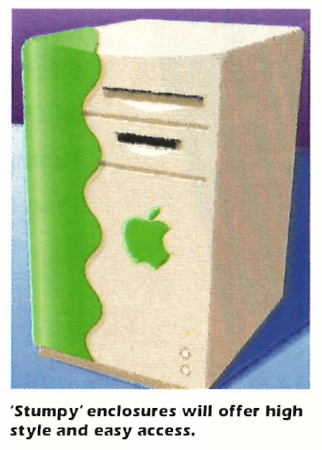
The Halo systems will reportedly offer the highest-­speed single or multiple processors available and will provide unique features via bundled PCI cards. The models may also feature high-style enclosures.

Iomega to Shrink Disks for Portable

by John Poultney

cover image

from the February 1997 issue of Australian MacUser magazine

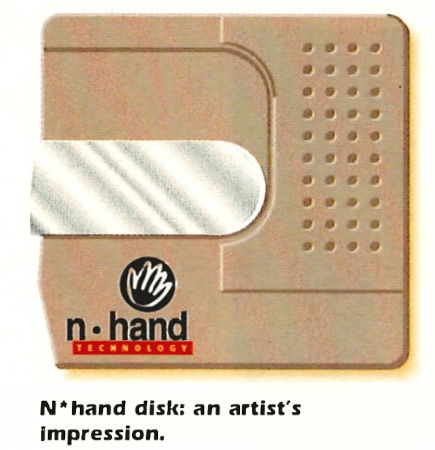
Iomega is spinning a new scheme for portable storage: 20MB floppy disks roughly half the size of business cards. The company has shown prototypes at Comdex/Fall in Las Vegas.

The new N*hand disks will measure 48mm square and will incorporate floating read-write heads, much like Iomega’s Zip drives.

Positioning the products as OEM devices for portable electronics, Iomega said it envisions N*hand competing with flash­-memory PC cards, such as those used in digital cameras. The mechanisms should be available in products by the second half of 1997, according to the company.

Next Mac OS to Be Based on NeXTstep

by Clifford Colby with Stephen Howard & Kelly Ryer

from the February 1997 issue of Australian MacUser magazine

On 20 December 1996 Apple announced it was buying NeXT Software for $US400 million and would use NeXTstep - NeXT’s Unix-based operating system - as the underpinnings of its future operating system. The announcement ends all speculation that Apple might acquire Be for the same purpose.

According to Ellen Hancock, Apple’s chief technical officer, the company is commit­ted to releasing a beta version of the next-generation OS to select user sites and developers by the end of 1997. Hancock said the initial release will not include compatibility with System 7 applications, but she stressed that the new OS will run those applications when it ships to customers in 1998.

Plan Be

by Henry Bortman and Jeff Pittelkau

cover image

from the February 1997 issue of Australian MacUser magazine

The Mac commnunity has been electrified by the announce1nent that Apple’s next OS will be based on NeXTstep technologies. But, if this hybrid OS does not meet our expectations, Power Mac users will soon be able to use a third-party alternative: a strategy we dub ‘Plan Be .’


Apple has its work cut out for itself. After slip­ping the schedule on Copland, its much bally-hooed next-generation operating system (OS), by nearly two years, the company has now cancelled the project entirely and announced an alternative strategy that involves the use of NeXTstep technolo­gies. The hybrid OS sounds good, but it will not ship until 1998.

Rhapsody in Blue

by Richard Foxworthy, Editor

from the February 1997 issue of Australian MacUser magazine

By now, most readers will have heard the news - Gil Amelio and the crew at Apple Computer spent their Christmas break writing large cheques - totalling $US400 million - to acquire NeXT Software, the company launched by original Apple co-founder Steve Jobs after losing a 1985 power struggle with then Apple CEO John Sculley.

In a twist that will delight many and horrify some, Steve Jobs himself - the single person most responsible for the Macintosh - is part of the deal. He may only have returned to Apple in the guise of a part-time marketing and technology adviser to Gil Amelio, but he’s baa-aack.

Why Apple Pulled the Plug

by Galen Gruman

from the November 1997 issue of MacWorld magazine

How quickly the dream died. In December 1994, Apple ended its Macintosh monopoly, giving Power Computing and Radius licenses to make their own Macs. With Wtndows 95 on the horizon and the success of an Intel/Microsoft duopoly clear, Apple’s leaders and the industry saw a chance for the Mac market to gain a new level of competitiveness, flexibility, and innovation.