NeXT

Apple Starts to Fill in the Blanks

by Steven Noble

from the February 1997 issue of Australian MacUser magazine

Apple computer has bought NeXT Software, and is going to use that company’s high-perfor­mance operating system (OS) NeXTstep as the basis of the next major revision of the Mac OS - code-named Rhapsody. This is good news, because NeXTstep has many of the fea­tures that bring speed, stability and strength to next-generation operating systems, including protected memory, preemptive multitasking, and a modern vir­tual memory system.

Be Bops on with New Software

by Howard Baldwin

RUNS BEOS ON INTEL AS NEW APPS ARE UNVEILED

from the November 1997 issue of MacWorld magazine

As Apple celebrates strong sales of Mac OS 8, Be (650/462-4100, www.be.com), developer of one of the oter operating systems for PowerPC CPUs, continues to bop along with new releases of its software.

In July, the company shipped its BeOS Preview Release for PowerPC, followed by an update that adds AppleTalk printing and improves video drivers and IDE support. Hedging its processor bets, Be also demonstrated its BeOS running on a dual-Pentium II PC at an August developer conference held on the eve of Macworld Expo in Boston.

Grand Opening

Sun and NeXT throw open the doors to industry-standard object-oriented computing

from the February 1994 issue of NeXTWorld magazine

by Lee Sherman

NEXTSTEP running on millions of desktops with scalable performance that makes it the environment of choice for everything from low-end workstations to high-performance servers.

It once seemed impossible.

But the stunning announcement in November that found longtime competitors NeXT and Sun agreeing to combine forces in an attempt to push NEXTSTEP as the standard operating and development environment for object-oriented client-server systems has dramatically increased NEXTSTEP’S chances of becoming entrenched in the enterprise, long before Taligent or Microsoft can even field a product.

Next Mac OS to Be Based on NeXTstep

by Clifford Colby with Stephen Howard & Kelly Ryer

from the February 1997 issue of Australian MacUser magazine

On 20 December 1996 Apple announced it was buying NeXT Software for $US400 million and would use NeXTstep - NeXT’s Unix-based operating system - as the underpinnings of its future operating system. The announcement ends all speculation that Apple might acquire Be for the same purpose.

According to Ellen Hancock, Apple’s chief technical officer, the company is commit­ted to releasing a beta version of the next-generation OS to select user sites and developers by the end of 1997. Hancock said the initial release will not include compatibility with System 7 applications, but she stressed that the new OS will run those applications when it ships to customers in 1998.

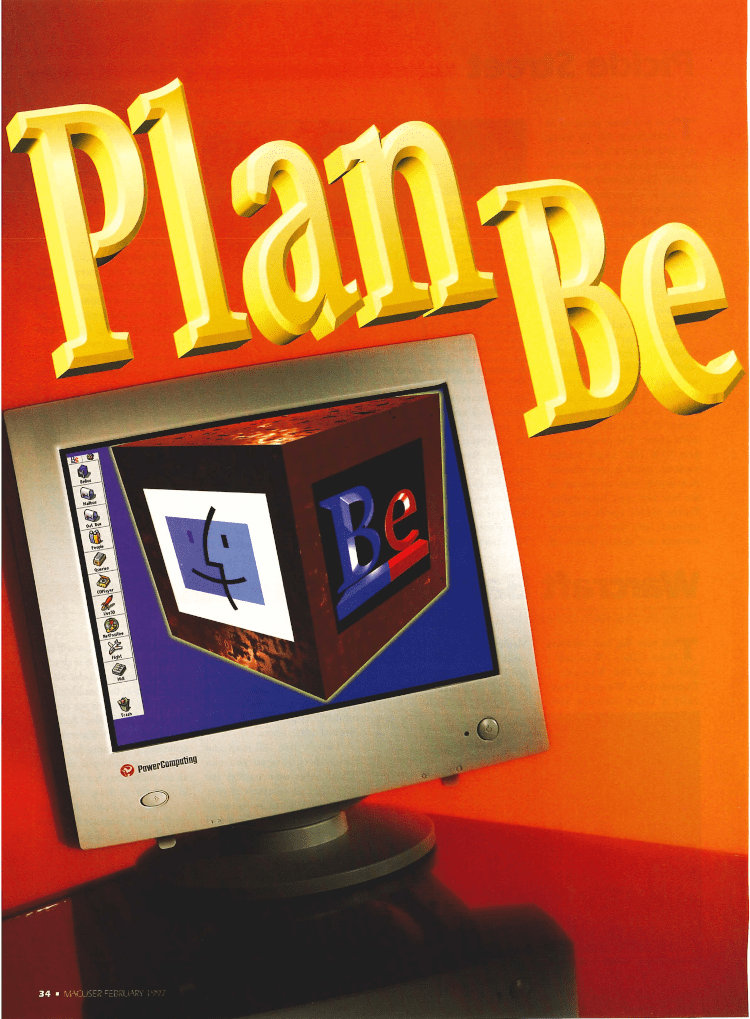
Plan Be

by Henry Bortman and Jeff Pittelkau

cover image

from the February 1997 issue of Australian MacUser magazine

The Mac commnunity has been electrified by the announce1nent that Apple’s next OS will be based on NeXTstep technologies. But, if this hybrid OS does not meet our expectations, Power Mac users will soon be able to use a third-party alternative: a strategy we dub ‘Plan Be .’


Apple has its work cut out for itself. After slip­ping the schedule on Copland, its much bally-hooed next-generation operating system (OS), by nearly two years, the company has now cancelled the project entirely and announced an alternative strategy that involves the use of NeXTstep technolo­gies. The hybrid OS sounds good, but it will not ship until 1998.

Rhapsody in Blue

by Richard Foxworthy, Editor

from the February 1997 issue of Australian MacUser magazine

By now, most readers will have heard the news - Gil Amelio and the crew at Apple Computer spent their Christmas break writing large cheques - totalling $US400 million - to acquire NeXT Software, the company launched by original Apple co-founder Steve Jobs after losing a 1985 power struggle with then Apple CEO John Sculley.

In a twist that will delight many and horrify some, Steve Jobs himself - the single person most responsible for the Macintosh - is part of the deal. He may only have returned to Apple in the guise of a part-time marketing and technology adviser to Gil Amelio, but he’s baa-aack.